Dehradun to Kedarnath is more than just a journey—it’s a pilgrimage that tests your endurance while rewarding you with spiritual serenity. Whether you’re a first-time pilgrim or a seasoned traveler, this 250-kilometer route through the Garhwal Himalayas demands proper planning. From navigating the 16-kilometer trek to understanding helicopter options, here’s everything you need to know based on current 2026 updates and ground realities.
Understanding the Dehradun to Kedarnath Route
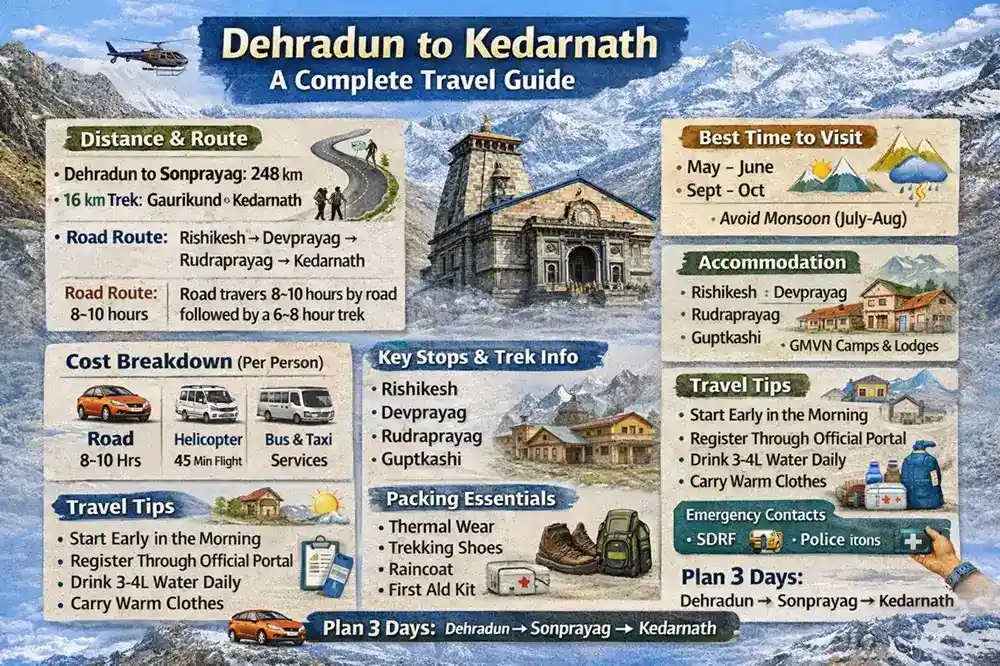
The Dehradun to Kedarnath distance spans approximately 248 kilometers by road until Gaurikund, followed by a steep 16-kilometer trek to the temple situated at 3,583 meters altitude. What most people don’t realize is that you can’t drive all the way—private vehicles stop at Sonprayag, and from there, government shuttles cover the final 5 kilometers to Gaurikund.
From practical experience, the road journey takes 8–10 hours under normal conditions. The route winds through Rishikesh → Devprayag → Srinagar → Rudraprayag → Guptkashi → Sonprayag → Gaurikund, offering stunning views of the Alaknanda and Mandakini rivers.
Key stops you shouldn’t miss:
- Devprayag (110 km from Dehradun): Sacred confluence of Bhagirathi and Alaknanda rivers forming the Ganges
- Rudraprayag (170 km): Another holy confluence and ideal lunch stop
- Guptkashi (220 km): Popular overnight halt with decent accommodation options
On the ground, night driving is strictly prohibited by Uttarakhand police in hilly sections, so plan to reach Sonprayag by evening.
Best Time to Visit Kedarnath
Best Time to Visit Kedarnath depends on what you’re willing to trade off. Based on weather patterns and crowd dynamics:
| Season |
Months |
Temperature |
Pros |
Cons |
| Peak Summer |
May–June |
10°C to 18°C |
Pleasant weather, clear skies |
Heavy crowds, expensive accommodation |
| Monsoon |
July–August |
4°C to 11°C |
Lush greenery, fewer tourists |
High landslide risk, road blocks, treacherous trekking |
| Post-Monsoon |
September–October |
5°C to 15°C |
Clear views, moderate crowds, stable weather |
Cold nights, shorter days |
In real life, September to mid-October offers the sweet spot—manageable weather without the May-June rush. The temple remains closed from November to April due to heavy snowfall, with the idol shifted to Omkareshwar Temple in Ukhimath for winter worship.
Kedarnath Opening Date 2026: April 22, 2026 at 8:00 AM (officially announced on Mahashivratri)
Closing Date: November 11, 2026 (Bhai Dooj)
How to Reach Kedarnath from Dehradun
Approach 1: Road + Trek (The Traditional Way)
This is how most pilgrims do it. Drive from Dehradun to Sonprayag (240 km), take the shuttle to Gaurikund, then trek 16 km uphill.
Dehradun to Kedarnath by road options:
- Private taxi: Most flexible, costs ₹12,000–₹28,000 round trip depending on vehicle
- Shared jeep: Budget-friendly but cramped
- State buses: UTC buses run till Guptkashi/Sonprayag from Rishikesh/Haridwar
Approach 2: Helicopter Services (Time-Saving)
For those short on time or unable to trek, helicopter services operate from multiple points:
| Route |
Duration |
Approximate Cost |
Best For |
| Dehradun (Sahastradhara) to Kedarnath |
45 min |
₹110,000/person |
Direct access, VIP darshan included |
| Phata/Sirsi/Guptkashi to Kedarnath |
7–10 min |
₹7,000–₹8,000 one-way |
Short transfer, needs road travel first |
Important: Book helicopter tickets only through the official IRCTC portal (heliyatra.irctc.co.in) to avoid scams .
Approach 3: Pony/Palki Services (Assisted Trek)
If you can’t walk the 16 km but want the traditional experience:
Pony rates from Gaurikund to Kedarnath: ₹2,300–₹3,200 one-way
Palki (palanquin) rates: ₹4,550–₹6,550 depending on weight
These are government-fixed rates—always book at official prepaid counters to avoid overcharging.
Approach 4: Mixed Mode (Smart Strategy)
Many experienced travelers combine approaches: drive to Guptkashi, stay overnight to acclimatize, take a helicopter up, and trek down (or vice versa). This reduces altitude sickness risk while saving costs.
The Kedarnath Trek
The Kedarnath trek difficulty is officially “moderate,” but don’t let that fool you. The trail climbs from 1,982 meters at Gaurikund to 3,583 meters at the temple—a gain of 1,600 meters over 16 kilometers .
Trek breakdown:
- Gaurikund to Jungle Chatti: 4 km, gradual ascent
- Jungle Chatti to Bheembali: 3 km, steeper sections
- Bheembali to Linchauli: 4 km, challenging terrain
- Linchauli to Kedarnath: 5 km, high altitude, thin air
From practical experience, fit trekkers take 6–7 hours; average pilgrims need 8–10 hours with breaks. The path is paved and well-marked, but the final stretch above Linchauli tests your lungs and legs.
Critical mistake to avoid: Starting after 8 AM. Afternoon weather in the Himalayas turns unpredictable, and you don’t want to be caught at altitude when temperatures drop or rain hits.
Registration & Permits
Char Dham Yatra registration is mandatory for all pilgrims. The Uttarakhand government uses this for crowd management and safety tracking.
How to Register:
- Online: Visit registrationandtouristcare.uk.gov.in (starts February 28, 2026)
- WhatsApp: Type “YATRA” and send to +91-8394833833
- Mobile app: Download “Tourist Care Uttarakhand”
- Offline: 30 counters in Rishikesh, 20 in Haridwar
Registration fee: ₹10–₹20 (nominal charge proposed for 2026)
Required: Aadhaar card is mandatory for registration
You’ll receive a QR-coded wristband—wear it throughout the journey. Physical verification happens at checkpoints.
Accommodation Guide
En Route (Dehradun to Gaurikund)
- Guptkashi: Best overnight halt with hotels ranging ₹1,500–₹3,000
- Sitapur: Closer to Gaurikund, limited but strategic for early starts
At Kedarnath
GMVN Tourist Guest House (Government-run, most reliable):
- Deluxe rooms: ₹1,500/night
- Basic but clean, near the temple
- Book through gmvn.in well in advance
Private options: Budget lodges ₹800–₹2,000; mid-range hotels ₹2,500–₹5,000
Pro tip: During peak season (May–June), prices triple and availability vanishes. Book 2–3 months ahead.
Cost Breakdown
Here’s what Dehradun to Kedarnath actually costs per person:
| Expense Category |
Budget Option |
Mid-Range |
Premium |
| Transport (Dehradun–Sonprayag round trip) |
₹1,500 (shared jeep) |
₹3,000 (bus + taxi) |
₹15,000 (private cab) |
| Accommodation (2 nights) |
₹1,000 (dorm/basic) |
₹3,000 (hotel) |
₹6,000 (deluxe) |
| Food (3 days) |
₹800 |
₹1,500 |
₹2,500 |
| Trek assistance |
₹0 (walk) |
₹2,500 (pony one-way) |
₹7,000 (helicopter one-way) |
| Registration/misc |
₹500 |
₹1,000 |
₹2,000 |
| TOTAL |
₹3,800 |
₹11,000 |
₹32,500 |
3-day package tours from Dehradun typically start at ₹12,999 including transport, stay, and meals.
Altitude Sickness
At 3,583 meters, Kedarnath has 30–40% less oxygen than sea level
. Altitude sickness doesn’t discriminate—even fit trekkers can experience symptoms if they ascend too quickly.
Warning signs:
- Headache (most common first symptom)
- Dizziness or lightheadedness
- Shortness of breath at rest
- Nausea or loss of appetite
- Extreme fatigue
Prevention strategies that actually work:
- Acclimatize overnight at Guptkashi (1,319m) or Sitapur before trekking
- Hydrate aggressively—3–4 liters daily, even if not thirsty
- Walk slowly—this isn’t a race; take breaks every 30 minutes
- Avoid alcohol completely during the journey
- Consider Diamox (Acetazolamide) after consulting your doctor—start 24 hours before ascent
Who should skip the trek:
- Heart patients without medical clearance
- Those with uncontrolled blood pressure
- Recent surgery patients
- Pregnant women
For high-risk travelers, helicopter services aren’t just convenient—they’re medically prudent.
Temple Timings & Darshan Protocol
Kedarnath Temple daily schedule:
- Morning Aarti: 4:00 AM – 7:00 AM
- General Darshan: 7:00 AM – 3:00 PM
- Temple Closed: 3:00 PM – 5:00 PM
- Evening Darshan: 5:00 PM – 7:00 PM
- Evening Aarti: 6:00 PM – 7:30 PM
New rule for 2026: Mobile phones and cameras are banned inside all Char Dham temples including Kedarnath. Deposit them at designated counters before entry.
Entry fee: Free (no cost for darshan)
Safety Tips & Common Mistakes
What Most People Get Wrong
Mistake 1: Attempting the trek without registration
- Reality: You won’t be allowed past checkpoints without biometric registration
Mistake 2: Carrying heavy luggage on the trek
- Reality: Pack light—10 kg max. Porters charge ₹500–₹800 for bags
Mistake 3: Ignoring weather warnings during monsoon
- Reality: July–August landslides have caused fatalities. The 2013 disaster remains a stark reminder
Mistake 4: Not carrying cash
- Reality: ATMs are scarce after Rudraprayag; card machines often fail at altitude
Essential Packing List
- Warm layers: Thermals, fleece, windproof jacket (nights hit 0°C even in summer)
- Footwear: Waterproof trekking shoes with ankle support
- Medical kit: ORS packets, headache pills, personal medications, portable oxygen (optional but recommended for seniors)
- Documents: Registration slip, ID proof, emergency contacts
- Cash: ₹5,000–₹10,000 in small denominations
FAQs Based on Real Traveler Doubts
Q: Can I drive my own car to Kedarnath?
No. Private vehicles stop at Sonprayag. Government shuttles (₹50–₹100) take you to Gaurikund.
Q: Is the Kedarnath trek safe for beginners?
Yes, if you’re reasonably fit and follow acclimatization protocols. The path is well-maintained, and medical posts exist at every 2–3 km.
Q: How do I book helicopter tickets?
Only through heliyatra.irctc.co.in. Avoid touts promising “confirmed” tickets.
Q: What if I get altitude sickness during the trek?
Descend immediately to the nearest medical post. Oxygen is available at Jungle Chatti, Bheembali, and Linchauli. Severe cases require evacuation to Guptkashi.
Q: Are there food options on the trek?
Yes, basic tea stalls and maggi points every 2–3 km. Prices increase with altitude—₹50 for tea at Gaurikund becomes ₹150 near the temple.
Q: Can I visit Kedarnath in one day from Dehradun?
Technically possible via helicopter (Dehradun→Kedarnath→Dehradun same day), but physically draining and spiritually rushed. Not recommended.
Final Thoughts: Making Your Journey Count
The Dehradun to Kedarnath route isn’t just about reaching the temple—it’s about the transformation that happens en route. When you’re walking that final kilometer to the temple, lungs burning, legs heavy, and suddenly the stone structure appears against the snow peaks, something shifts.
From practical experience, build buffer days into your itinerary. Weather in the Himalayas operates on its own schedule. A landslide near Rudraprayag can delay you by hours; sudden rain can make the trek treacherous. The pilgrims who enjoy this journey most are those who aren’t racing against time.
Book your registration early, respect the altitude, travel light, and keep your expectations flexible. Whether you trek, ride a pony, or fly by helicopter, the darshan of Baba Kedar remains equally profound. The mountain doesn’t care how you got there—only that you arrived with devotion and preparation.

 Call
Call WhatsApp
 Enquiry