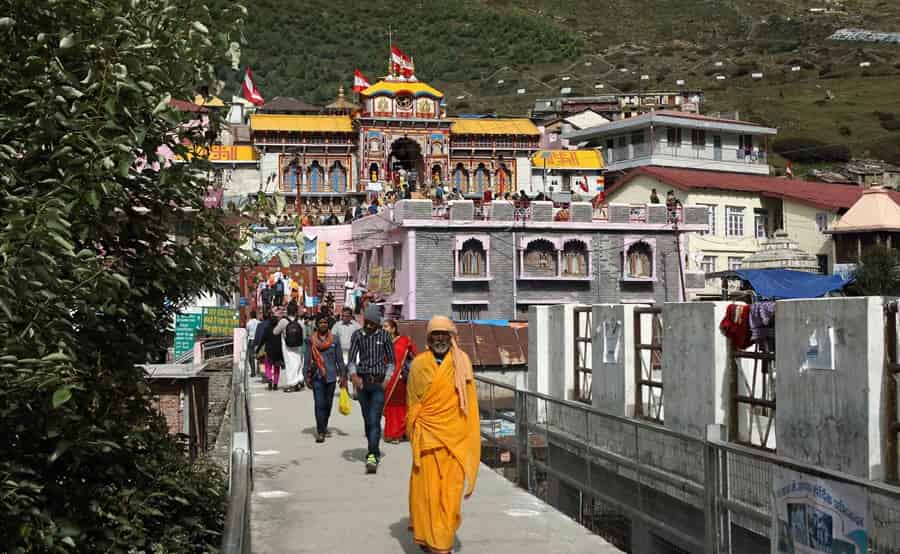
Legends Behind the Origin of Badrinath
The spiritual roots of Badrinath are deeply embedded in Hindu mythology, with multiple legends explaining its divine significance.
Legend 1 – Badrikashram
It is believed that Lord Vishnu performed intense penance in the Himalayas. To protect Him from extreme weather, Goddess Lakshmi took the form of a Badri (berry) tree and sheltered Him. Pleased with her devotion, Lord Vishnu named the place Badrikashram, later known as Badrinath.
Legend 2 – Shiva and Vishnu
Another legend says that Lord Shiva and Goddess Parvati were meditating at Badrinath when a young boy disturbed them. The boy was Lord Vishnu in disguise. Understanding the divine will, Shiva and Parvati moved to Kedarnath, making Badrinath the seat of Vishnu.
Legend 3 – Nar and Narayan
According to ancient scriptures, sages Nar and Narayan (incarnations of Lord Vishnu) chose this region near the Alaknanda River for meditation due to the presence of both hot and cold water sources. The place came to be known as Badri Vishal.
Legend 4 – Alaknanda and Ganga
It is believed that Lord Shiva controlled the fierce flow of River Ganga by dividing it into several streams, one of which is the Alaknanda River flowing beside Badrinath.
Location of Badrinath Dham
Badrinath is situated in Chamoli district, Uttarakhand, on the banks of the Alaknanda River. It lies between the twin mountain ranges of Nar and Narayan, approximately 9 km east of Neelkanth Peak and north of Rishikesh.
Nearby Places to Visit Around Badrinath
Apart from the main temple, pilgrims often explore several spiritually and naturally significant spots nearby:
Tapt Kund
A natural hot water spring where pilgrims take a holy dip before temple darshan. The sulfur-rich water is believed to have therapeutic properties.
Narad Kund
Located close to the temple, this sacred kund is believed to be the place where Adi Shankaracharya recovered the idol of Lord Vishnu.
Neelkanth Peak
Standing at around 6,500 meters, Neelkanth Peak is a majestic snow-covered mountain associated with Lord Shiva and admired by trekkers and photographers.
Other notable spots include Vyas Gufa, Ganesh Gufa, Mata Murti Temple, and Charan Paduka.
How to Reach Badrinath
Badrinath is accessible by air, rail, and road during the pilgrimage season.
By Air
The nearest airport is Jolly Grant Airport, Dehradun, around 330 km from Badrinath. From Dehradun, taxis and buses are available. Helicopter services to Badrinath are also available during the Char Dham season and are increasingly preferred by senior citizens.
By Train
Haridwar Railway Station is the closest railhead, approximately 311 km away. It is well connected to major Indian cities.
By Road
Road travel is the most common and economical option. State-run and private buses operate from Haridwar, Rishikesh, and Dehradun via Joshimath. Road conditions improve significantly after the winter snow clearance.
Best Time to Visit Badrinath
Summer (May to June)
This is the best time to visit Badrinath. Temperatures range between 7°C to 18°C, making it suitable for darshan and sightseeing.
Monsoon (July to August)
Although temperatures remain manageable, heavy rainfall and landslides are common. Travel during this time is risky and not recommended.
Autumn (September to October)
Post-monsoon months offer clear skies, fewer crowds, and pleasant weather, making it another ideal window before temple closure.
Winter (November to April)
The temple remains closed due to heavy snowfall, and the idol is shifted to its winter seat at Joshimath.
Important Travel Tips for Badrinath Yatra
- Yatra Registration: Registration for Char Dham Yatra is mandatory for all pilgrims in 2026. Complete it online or at authorized counters.
- Weather Readiness: Always carry woollen clothes, even in summer, as temperatures can drop suddenly.
- Footwear: Wear sturdy walking shoes with good grip for mountain terrain.
- Water & Food Safety: Drink only packaged or boiled water. Avoid unhygienic food.
- Cash Availability: Carry sufficient cash, as ATMs may not work consistently in remote areas.
- Health Precautions: Walk slowly, stay hydrated, and avoid overexertion to prevent altitude sickness.
- Beware of Fake Guides: Always verify ID cards before hiring local guides or porters.
- Eco Responsibility: Do not litter. Respect the fragile Himalayan ecosystem.
Final Words
A journey to Badrinath Dham is not just a pilgrimage—it is a spiritual awakening amidst the grandeur of the Himalayas. With proper preparation, awareness of weather and travel conditions, and respect for local customs, your Badrinath Yatra 2026 can be peaceful, safe, and deeply fulfilling.
Faith, patience, and planning together make this divine journey truly memorable.
Frequently Asked Questions
Q1. When will Badrinath Temple open in 2026?
Badrinath Temple is expected to open in early May 2026, depending on the auspicious date announced by the temple committee after Basant Panchami.
Q2. Is registration mandatory for Badrinath Yatra 2026?
Yes, Char Dham Yatra registration is mandatory for all pilgrims visiting Badrinath in 2026. Registration can be done online or at designated registration counters in Uttarakhand.
Q3. What is the best time to visit Badrinath Dham in 2026?
The best time to visit Badrinath is from May to June and September to October 2026, when the weather is pleasant and roads are generally open.
Q4. Is Badrinath safe to visit during monsoon season?
Travel during the monsoon months (July–August) is risky due to landslides and road blockages. Pilgrims are advised to check weather and road conditions before planning.
Q5. How can senior citizens prepare for Badrinath Yatra?
Senior citizens should consult a doctor before travel, carry prescribed medicines, walk slowly to avoid altitude sickness, and stay properly hydrated.
Q6. Are helicopter services available for Badrinath in 2026?
Yes, helicopter services are available for Badrinath Yatra from nearby locations during the yatra season, subject to weather conditions and availability.
Q7. What kind of accommodation is available near Badrinath Temple?
Badrinath offers budget hotels, guest houses, dharamshalas, and GMVN accommodations suitable for pilgrims.
Q8. What clothes should pilgrims carry for Badrinath Yatra?
Pilgrims should carry warm woollen clothes, jackets, gloves, rainwear, and comfortable walking shoes as temperatures can drop suddenly.
Q9. Is mobile network and internet available in Badrinath?
Mobile connectivity is available but may be limited or unstable in some areas. Internet services can be slow due to the remote Himalayan location.
Q10. Are medical facilities available at Badrinath?
Basic medical facilities and emergency health services are available in Badrinath during the yatra season, but pilgrims with health issues should carry personal medicines.

 Call
Call WhatsApp
 Enquiry