Last Updated on March 11, 2026
Most people plan every detail of their Char Dham Yatra — transport, accommodation, registration, helicopter tickets. And then they forget about food until they’re standing hungry at 11,000 feet with nothing but a tea stall in sight.
Don’t let that be you.
Despite the remote locations and high altitudes, food during the Char Dham Yatra is both accessible and thoughtfully prepared. Pilgrims are served meals that support not just their physical needs but also align with the spiritual nature of the journey. From warm thalis in Rishikesh to free langar meals at Kedarnath — the food story along this route is richer than most pilgrims expect.
Here’s the complete, ground-level guide to eating well on the Char Dham Yatra 2026.
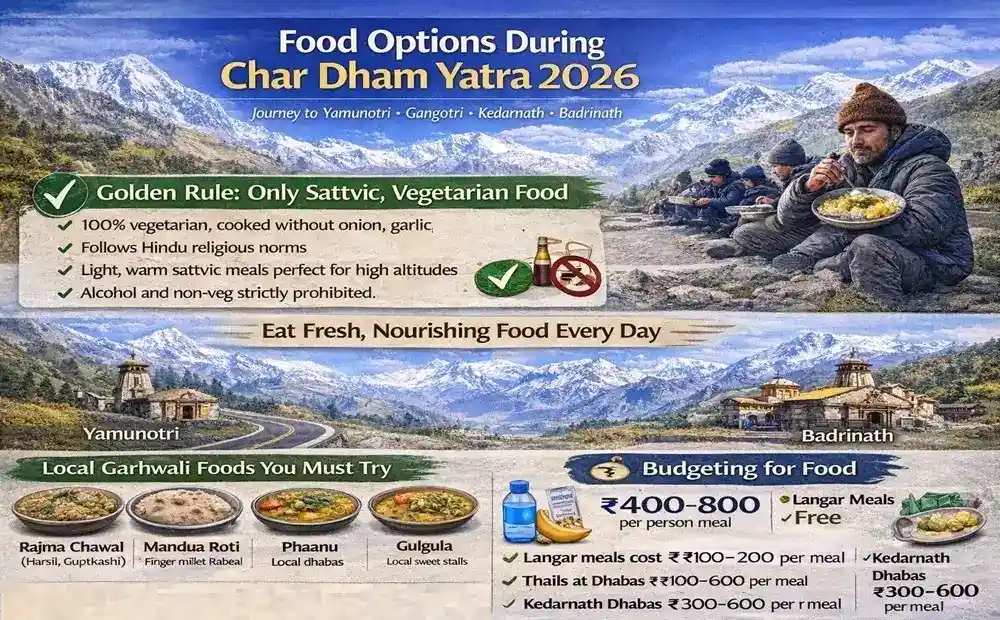
The Golden Rule: Only Sattvic, Vegetarian Food
Before anything else — know this rule and respect it.
All food during the Char Dham Yatra is strictly vegetarian due to religious norms. Non-vegetarian food is not available or allowed anywhere along the pilgrimage route.
A majority of the food during the Char Dham Yatra consists of sattvic food — vegetarian and cooked without onion or garlic. These meals are simple, nourishing, and spiritually appropriate for devotees.
In real life, this isn’t a restriction — it’s a relief. The food is freshly cooked, warming, and perfectly suited to what your body needs at high altitude. Light, digestible, and filling.
Alcohol, tobacco, and non-vegetarian food are strictly prohibited along the route. During fasting periods or Ekadashi, pilgrims are offered vrat food like fruits, sabudana, or buckwheat preparations.
Food at Each Dham — What to Expect on the Ground
1. Yamunotri — Simple, Sacred, and Surprisingly Good
Yamunotri sits at 3,293 metres and is the first stop on the Char Dham circuit. Food options here are basic but adequate.
At Yamunotri, the most unique food experience is the boiled rice prasad cooked in the natural hot springs near the temple. Pilgrims bring raw rice and potatoes in cloth bags, lower them into the Surya Kund hot spring, and retrieve fully cooked prasad within minutes. It’s one of the most memorable food experiences on the entire Yatra.
Small dhabas and rest houses are available at Janki Chatti — the base point for the Yamunotri trek — serving basic thalis, chai, and snacks. The trek to Yamunotri is 6 km, so carry dry snacks, energy bars, and water to avoid energy dips midway.
Best eatery near Yamunotri: Janki Chatti Veg Dhaba and GMVN Tourist Rest House Canteen at Barkot — clean, government-run, and budget-friendly.
2. Gangotri — Clean Dhabas, Mountain Air, and Sattvic Thalis
At Gangotri, pilgrims can find jaggery-based sweet prasad and light sattvic snacks near the temple area. The town is small but has a reasonable number of vegetarian restaurants and dhabas clustered near the temple entrance.
What most people don’t realize is that Harsil — a small village about 25 km before Gangotri — has some of the best food stops on this stretch.
The Rajma Chawal Dhaba at Harsil is particularly popular among pilgrims, serving freshly cooked rice and rajma prepared with local mountain spices — one of the most comforting meals you’ll find on the entire route.
The Gangotri Veg Thali House near the temple serves sattvic thali meals, and Hotel Shivlinga Restaurant in Uttarkashi is known for hygienic, pure vegetarian food — a solid stop for anyone spending a night in Uttarkashi before heading up.
3. Kedarnath — Langar, Local Flavors, and High-Altitude Dhabas
Kedarnath is where food becomes most meaningful — and most limited. Plan this stop carefully.
At Kedarnath, free khichdi and tea are served at temple langars run by seva organizations and religious trusts. Free langar food services are available at many points near Kedarnath — one of the most relied-upon food sources for budget pilgrims on the route.
For paid meals, food costs at Kedarnath typically range between ₹300 and ₹600 per meal during peak season. Prices are higher here than anywhere else on the circuit — a direct result of the cost of transporting ingredients 16 km up the mountain on ponies and porters.
On the trek from Gaurikund to Kedarnath, small tea stalls and food shacks are present along the way, usually serving tea, snacks, and instant noodles. These are lifesavers on a cold, foggy morning climb.
Other reliable food stops near the Kedarnath route include Namami Gange & Restaurant at Sonprayag for pure vegetarian food, Pahadi Kitchen at Sonprayag for local Garhwali dishes, and Hotel Bharat & Restaurant at Rudraprayag for mid-way thalis and local favorites.
Trek food tip: Temperature at Kedarnath ranges from 0 to 3 degrees Celsius during daytime and drops further at night — proper food supplies and warm meals are not optional, they’re essential for safety.
4. Badrinath — Most Variety, Warmest Meals, Best Prasad
Badrinath, the final Dham, offers the best overall food infrastructure of all four shrines.
At Badrinath, pilgrims can expect pure vegetarian sattvic meals made without onion or garlic. Various eateries serve simple but nutritious North Indian fare — dal, rice, chapatti, and seasonal vegetables. Local Garhwali cuisine is also available. Langar services offering free meals are accessible here too.
The famous prasad at Badrinath is the warm khichdi bhog served after darshan — blessed, simple, and deeply nourishing after a long day of travel and prayer.
After darshan, a visit to Mana village — the last village before the Indo-Tibet border — is a must. Try the local til laddoos here for energy. They’re made from sesame seeds and jaggery and are a traditional Garhwali specialty.
Local Garhwali Foods You Must Try on the Route
The Char Dham route passes through the heart of Garhwali culture. Don’t just eat at dhabas — try the local food.
| Dish |
Where to Find It |
What It Is |
| Rajma Chawal |
Harsil, Guptkashi |
Red kidney beans with rice — the mountain staple |
| Mandua Roti |
Kedarnath area |
Flatbread from finger millet — high energy, ideal at altitude |
| Phaanu |
Local dhabas |
Mixed lentil dish soaked overnight — earthy and protein-rich |
| Khichdi Prasad |
Kedarnath & Badrinath temples |
Rice and lentil porridge — served as blessed temple food |
| Gulgula |
Local sweet stalls |
Deep-fried sweet fritters made with wheat flour and jaggery |
| Singori |
Uttarkashi onwards |
Khoya wrapped in maalu leaf — a unique local sweet |
| Til Laddoo |
Mana village, Badrinath |
Sesame and jaggery balls — portable, high-energy snack |
| Kumaoni Raita |
All along route |
Yogurt with local herbs and cucumber — cooling and refreshing |
Local Garhwali dishes like Phaanu, Mandua Roti, and Arsa are made with lentils, local grains, and mountain ingredients that give pilgrims the energy and warmth needed to handle tough mountain terrain. Don’t skip these in favor of packaged food — the real flavors of Devbhoomi are worth every bite.
Langar and Dharamshala Meals — The Heart of Pilgrim Feeding
Many temples and ashrams along the Char Dham route serve langar or bhojanalaya meals for free or at minimal cost. These community kitchens are run by religious trusts, NGOs, and Sikh and Hindu organizations — and in 2026, their reach has expanded significantly.
In 2026, langar services and NGO-run food tents have improved near all major temples, with eco-friendly dhabas using solar kitchens on key stretches of the route.
What you typically get at a langar:
- Dal and rice or khichdi
- Sabzi (seasonal vegetables)
- Roti or puri
- Pickle and buttermilk
- Hot chai
Food at dharamshalas and community kitchens is offered at minimal or no cost — one of the most important food sources for pilgrims traveling on a tight budget.
Food Cost Breakdown — Char Dham Yatra 2026
| Food Type |
Location |
Estimated Cost |
| Langar meal |
Near all temples |
Free |
| Simple thali (dal, roti, sabzi) |
Dhabas along route |
₹100 – ₹200 |
| Full restaurant meal |
Town hotels |
₹250 – ₹500 |
| Meal at Kedarnath (peak season) |
Temple area |
₹300 – ₹600 |
| Tea / chai |
Trek stalls |
₹20 – ₹30 |
| Packaged snacks / energy bars |
Small shops |
₹50 – ₹150 |
| Prasad (all Dhams) |
Temple counters |
₹30 – ₹100 |
Food is generally affordable across the Char Dham route. Packaged or branded items may be slightly more expensive due to transportation costs at higher altitudes.
Budget estimate: ₹400–₹800 per day per person for all meals if eating at dhabas and taking langar meals. More if you prefer hotel dining.
What to Carry — Food Essentials for the Char Dham Trek
Some sections of the route — especially the Kedarnath and Yamunotri treks — have limited food options in bad weather. Be prepared.
Keep water, packaged food, energy bars, chocolates, and ready-to-eat foods handy during the Yatra.
Recommended items to pack:
- Dry fruits — almonds, walnuts, dates (high energy, lightweight)
- Energy bars and glucose biscuits
- Instant oats or upma sachets (just add hot water)
- ORS sachets — dehydration is common at altitude
- Herbal or ginger tea bags
- Packaged khakhra or murmura for quick snacking on the trek
- A reusable water bottle with purification tablets as backup
Carrying your own food is a good backup option, especially on the Kedarnath trail where tea stalls may close in bad weather.
Food Safety Tips — Eat Right, Stay Healthy at High Altitude
On the ground, food hygiene is the #1 reason pilgrims fall sick mid-Yatra. A few rules that really matter:
- Choose clean dhabas and restaurants with running water. Wash fruits before eating and avoid raw salads in remote areas.
- Eat early in the evening — most kitchens on the route close by 8 PM. Don’t rely on finding a late dinner.
- Avoid heavy, oily meals on trek days — your digestive system works differently at altitude.
- Drink hot liquids regularly. Hot chai helps with altitude adjustment and is available at virtually every rest stop on the trek.
- Never skip breakfast before a trek. A paratha, curd, or banana in the morning gives you the fuel you need before a 6-hour climb.
- The Uttarakhand Health Department advises pilgrims to plan at least a seven-day Yatra schedule to properly adjust to the fluctuating climate conditions — rushing the journey affects both your health and your ability to digest food properly at altitude.
Quick Reference — Best Food Stops by Location
| Location |
Best Food Option |
Type |
| Rishikesh / Haridwar |
Multiple restaurants, ashram kitchens |
Paid / Free |
| Barkot (Yamunotri base) |
GMVN Canteen |
Budget paid |
| Janki Chatti |
Local veg dhabas |
Budget paid |
| Uttarkashi |
Hotel Shivlinga Restaurant |
Mid-range paid |
| Harsil |
Rajma Chawal Dhaba |
Budget paid |
| Gangotri |
Gangotri Veg Thali House |
Budget paid |
| Rudraprayag |
Hotel Bharat & Restaurant |
Mid-range paid |
| Sonprayag |
Pahadi Kitchen, Namami Gange |
Budget paid |
| Kedarnath |
Temple Langar |
Free |
| Badrinath |
Temple Bhog + Local dhabas |
Free / Paid |
| Mana Village |
Til Laddoo stalls |
Local snack |
FAQs
Q-1: Is only vegetarian food available on the Char Dham route?
Ans: Yes — all food on the Char Dham Yatra is strictly vegetarian. Non-vegetarian food is neither available nor permitted anywhere on the route.
Q-2: Can I find food without onion and garlic?
Ans: Most meals are sattvic and free from onion and garlic. You can request simple preparations like plain rice or boiled vegetables at most dhabas.
Q-3: Is food available on the Kedarnath trek route?
Yes — small tea stalls and food shacks serve tea, snacks, and instant noodles along the Kedarnath trail. Carrying your own food is still a good backup.
Q-4: Are there free meals available?
Ans: Yes — many temples, ashrams, and langars serve free or minimal-cost meals at all four Dhams.
Q-5: What’s the best food to carry for the Kedarnath trek?
Ans: Dry fruits, energy bars, glucose biscuits, ORS sachets, and instant oats. Light, high-energy, and easy to carry.

 Call
Call WhatsApp
 Enquiry