Last Updated on February 17, 2026
Planning the Char Dham Yatra is not just about choosing destinations; it is about deciding how you want to experience the Himalayas. The debate around Char Dham Yatra by helicopter vs by road has become stronger in recent years because both options offer completely different journeys, even though the spiritual destination remains the same.
The four sacred shrines included in this pilgrimage are:
What many people fail to understand is that the mode of travel changes the emotional rhythm of the pilgrimage. When you fly, the journey becomes efficient and structured. When you travel by road, the journey slowly unfolds through mountain curves, rivers, small towns, and gradual altitude gain, which creates a very different psychological and spiritual experience.
So instead of asking which option is better, the more useful question is: which option aligns with your time, health, expectations, and travel style?
Let’s break it down thoroughly.
Understanding the Core Difference
At first glance, the choice seems simple — helicopter is faster, road is slower. But in real-world Himalayan conditions, the difference is much deeper.
Helicopter travel compresses distance. Road travel expands experience.
Helicopter itineraries usually operate from:
Sahastradhara Helipad
Road journeys typically begin from:
Rishikesh or Haridwar
The physical strain, exposure to altitude, dependency on weather, cost implications, and flexibility differ drastically between the two.
Char Dham Yatra by Helicopter – In-Depth Insight
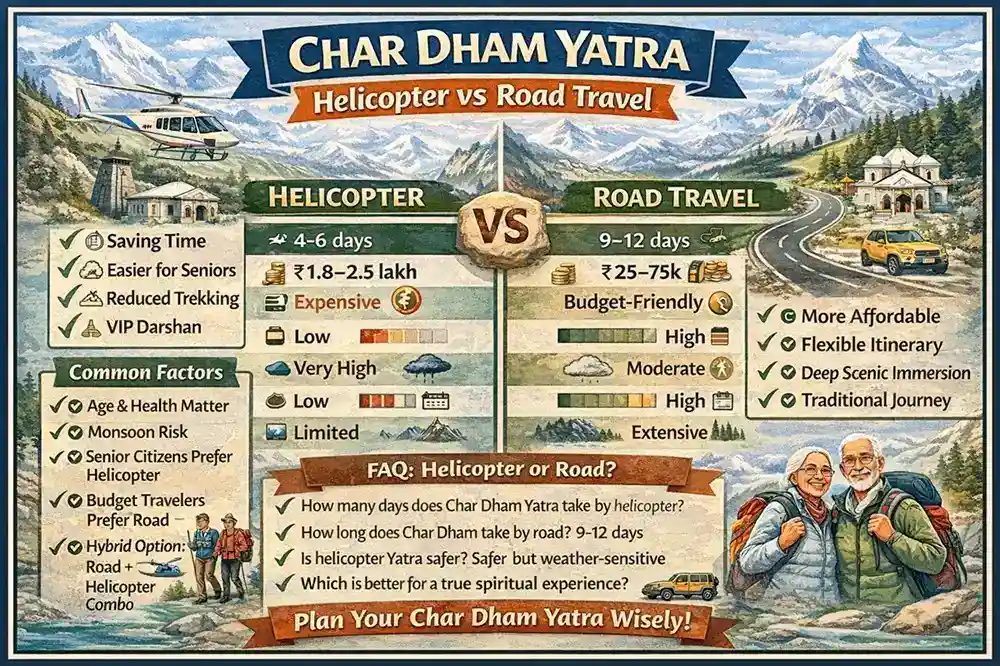
Helicopter packages usually last between 4 to 6 days and are designed to cover all four dhams in a compact schedule. The experience is structured, time-bound, and logistically managed by aviation operators who coordinate landing slots, hotel transfers, and VIP darshan arrangements.
The typical cost ranges between ₹1.8 lakh to ₹2.5 lakh per person, depending on season, operator reputation, accommodation quality, and inclusions.
What the Experience Feels Like
When you travel by helicopter, the journey feels elevated — literally and figuratively. You see snow-covered peaks from above, river valleys look like silver lines, and the vastness of the Himalayas becomes visually dramatic.
However, because you bypass long mountain roads and trekking stretches, the sense of gradual build-up is reduced. You land, attend darshan, and move on to the next location.
For many elderly travelers or those with limited time, this format is extremely practical.
Helicopter Cost Structure (Detailed)
| Expense Component |
Approximate Range |
| Base Package |
₹1.8–2.2 lakh |
| Premium Category |
₹2.2–2.5 lakh |
| Extra Stay (Weather Delay) |
Additional |
| Personal Expenses |
Separate |
The cost appears high because mountain aviation operations involve high fuel consumption, strict safety compliance, limited landing windows, and complex logistics in high-altitude zones.
Advantages of Helicopter Travel
-
Significant time savings (5–7 days shorter than road travel)
-
Reduced physical exhaustion
-
Ideal for elderly pilgrims
-
Controlled itinerary with assistance
-
Less exposure to landslide-prone road segments
Disadvantages You Must Consider
Mountain weather is unpredictable. Even minor cloud cover or strong winds can delay or cancel flights. Reports in publications such as The Times of India and Hindustan Times frequently highlight weather-related disruptions during peak pilgrimage season.
Other limitations include:
-
Strict baggage weight (usually 5 kg soft bag only)
-
Limited flexibility in schedule
-
Higher financial commitment
-
Possible waiting hours due to weather clearance
This means helicopter travel reduces physical strain but increases weather dependency.
Char Dham Yatra by Road – The Traditional Path
Road travel generally takes 9–12 days and follows a structured but flexible circuit through Garhwal Himalayas. The drive passes through deep valleys, river confluences, pine forests, and historic towns like:
The road distance covers approximately 1,600+ kilometers including internal transfers.
What Road Travel Feels Like
This journey builds slowly. You witness the Bhagirathi river flowing alongside you for hours. You feel the temperature gradually drop as altitude increases. You experience small tea stalls in mountain villages. You observe how each dham feels geographically different.
This progression creates emotional continuity, which many pilgrims consider spiritually enriching.
Road Travel Cost Analysis
| Category |
Budget Range |
Comfortable Range |
| Shared Tour |
₹25,000–₹35,000 |
— |
| Private SUV (Group) |
₹55,000–₹75,000 |
— |
| Hotels |
₹1,500–₹6,000 per night |
— |
| Meals |
₹700–₹1,200 per day |
— |
Compared to helicopter, road travel is significantly more affordable and customizable.
Road Travel Challenges
-
Long daily drives (8–10 hours common)
-
Mountain fatigue accumulation
-
Traffic congestion during peak season
-
Kedarnath trekking requirement (16–18 km unless helicopter used locally)
If not paced properly, the road itinerary can become physically demanding.
Direct Comparison Table
| Factor |
Helicopter |
Road |
| Total Duration |
4–6 Days |
9–12 Days |
| Approx Cost |
₹1.8–2.5 Lakh |
₹25k–₹75k |
| Physical Effort |
Low |
Moderate–High |
| Scenic Immersion |
Limited |
Extensive |
| Weather Risk |
Very High |
Moderate |
| Flexibility |
Fixed |
Adjustable |
| Suitable for Seniors |
Highly |
Depends on fitness |
Safety Perspective
Helicopter travel reduces road accident exposure but increases sensitivity to weather. Road travel exposes you to landslide-prone areas, especially during monsoon.
The safest months for both options are:
-
May–June
-
September–Mid October
Avoid July–August due to heavy rainfall.
Hybrid Model – Balanced Approach
Many experienced travelers choose a hybrid approach:
This balances cost, comfort, and spiritual immersion effectively.
FAQ’s
1. Which is better: helicopter or road for Char Dham Yatra?
Helicopter is better for comfort and time-saving, while road travel is ideal for budget travelers and those seeking a traditional experience.
2. How many days does Char Dham Yatra take by helicopter?
It usually takes 4–6 days, depending on weather and schedule.
3. How many days are required for Char Dham Yatra by road?
By road, the yatra generally takes 9–12 days.
4. What is the cost difference between helicopter and road travel?
Helicopter packages cost around ₹1.8–2.5 lakh per person, while road trips range from ₹25,000 to ₹75,000 depending on comfort level.
5. Is helicopter Char Dham Yatra safe?
Yes, it is safe with authorized operators, but flights are highly weather-dependent.
6. Is road travel physically tiring?
Yes, road travel involves long driving hours and trekking, especially at Kedarnath.
7. Which option is better for senior citizens?
Helicopter is generally more suitable for elderly pilgrims due to reduced physical strain.
8. Can weather affect both travel options?
Yes. Helicopters may get delayed due to fog or wind, and roads can be affected by landslides during monsoon.
9. Is a hybrid option possible?
Yes, many travelers go by road and take a helicopter only for Kedarnath.
10. Which option gives a better spiritual experience?
Road travel often feels more immersive, as the gradual mountain journey becomes part of the pilgrimage.
Final Thought
The Char Dham Yatra by helicopter vs by road decision is not about luxury versus budget. It is about how you want to experience the Himalayas — quickly and efficiently, or slowly and deeply.
If you value time and comfort, helicopter travel serves you well.
If you value the unfolding rhythm of the mountains and want to absorb the journey as part of the pilgrimage, road travel offers unmatched depth.
Both are sacred. The difference lies in pace.

 Call
Call WhatsApp
 Enquiry